
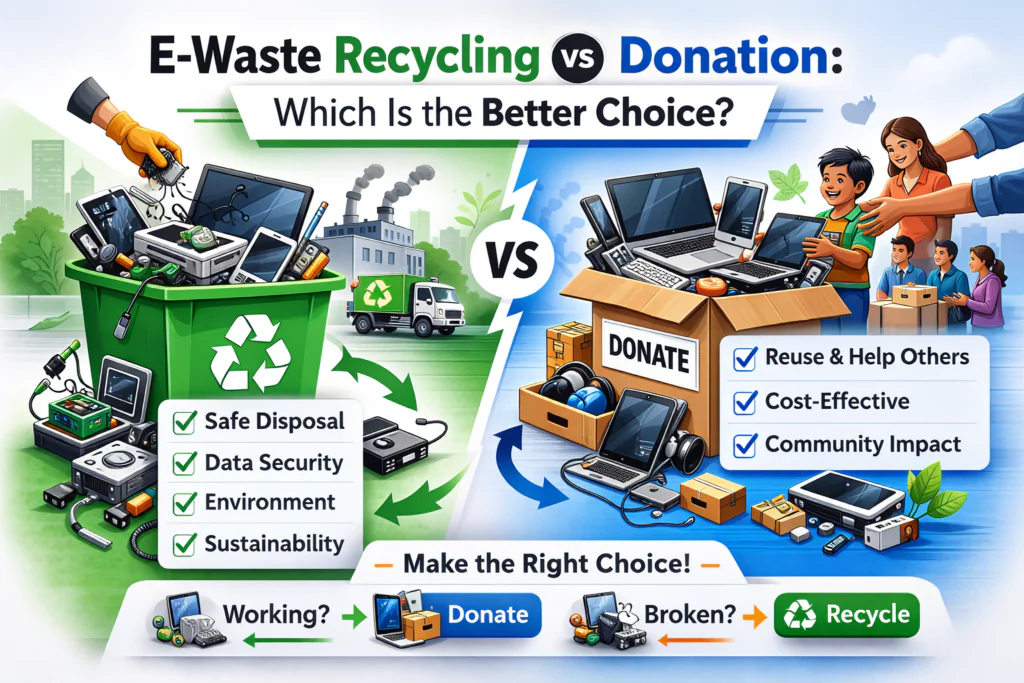
When you have old electronics to dispose of, you face a common dilemma: should you donate them or recycle them? Both options seem environmentally responsible, but they serve different purposes and come with different considerations. For Dallas residents and businesses, making the right choice depends on several factors including device condition, data security concerns, and your specific goals.
This guide explains the difference between e-waste recycling and donation, when each option makes sense, and how to make the choice that best fits your situation.
Understanding the Two Options
Before comparing recycling and donation, it helps to understand what each option actually means and what happens to your electronics.
What E-Waste Recycling Involves
Electronics recycling is the process of breaking down old devices to recover materials and dispose of hazardous components properly. When you recycle electronics:
- Devices are dismantled into component parts
- Hazardous materials are separated and processed safely
- Valuable materials like metals and plastics are recovered
- Data storage devices are destroyed to protect your information
- Materials are sent to manufacturers for reuse in new products
Recycling works for any electronic device regardless of condition. Broken computers, damaged phones, outdated equipment, and non-functional devices can all be recycled. The goal is material recovery and proper disposal, not continued use of the device.
What Electronics Donation Involves
Donation means giving working electronics to organizations that distribute them to people in need. When you donate electronics:
- Devices must be functional and usable
- Organizations may refurbish or repair minor issues
- Equipment goes to schools, nonprofits, low-income families, or individuals
- Devices continue their useful life with new users
- You may receive tax deductions for charitable contributions
Donation extends device lifespan and provides technology access to people who might not otherwise afford it. However, donation only works for functional equipment in reasonable condition.
When Recycling Is the Better Choice
Several situations make recycling the clear choice over donation for Dallas residents and businesses.
Broken or Non-Functional Devices
If your electronics do not work properly, recycling is your only responsible option. Donation organizations cannot use devices that:
- Fail to power on or boot properly
- Have cracked screens or damaged displays
- Contain failing hard drives or corrupted systems
- Lack necessary components or cables
- Are too outdated to run current software
Attempting to donate broken equipment wastes the organization’s time and resources. They must dispose of unusable items anyway, creating extra work without benefit.
Devices Containing Sensitive Data
Electronics that have stored personal or business information require careful data handling. Recycling services that provide certified data destruction like offer security that donation cannot match.
When you donate a computer or phone, you become responsible for removing all data yourself. Common deletion methods like reformatting or factory resets often leave data recoverable. If you miss anything, your information goes to whoever receives the device.
For businesses, donating equipment with customer data, financial records, or proprietary information creates unacceptable risk regardless of deletion attempts. Professional data destruction through recycling eliminates this vulnerability.
Very Old or Obsolete Equipment
Technology more than five to seven years old often has limited usefulness. Old computers cannot run current software, creating security vulnerabilities and compatibility issues. Donation organizations increasingly decline very old equipment because:
- Security updates are no longer available
- Software compatibility becomes problematic
- Hardware performance is inadequate for modern tasks
- Energy efficiency is poor compared to newer devices
Rather than burdening charities with equipment they cannot use, recycle outdated technology and let the materials support manufacturing of newer devices.
Corporate Equipment Retirement
Dallas businesses retiring multiple computers, servers, or other equipment should prioritize recycling over donation. Business equipment typically contains sensitive data requiring professional destruction. The volume of equipment also makes donation impractical, as most organizations cannot accept large quantities at once.
Additionally, businesses need documentation for asset disposal, compliance requirements, and tax purposes. Professional recycling services provide the certificates and records businesses need, while donation processes vary widely.
Devices with Compliance Requirements
Healthcare providers, financial institutions, legal firms, and other regulated businesses must follow specific requirements for data disposal. Donation does not meet these compliance standards. Recycling with certified data destruction provides the documentation and security these industries require.
When Donation Makes Sense
Despite the strong case for recycling in many situations, donation remains the better choice in specific circumstances.
Functional, Recent Equipment
If you have electronics that:
- Work properly without issues
- Are less than three to five years old
- Include all necessary components and accessories
- Can run current software and security updates
Then donation extends their useful life and benefits people who need technology access. This represents the most environmentally friendly option because it maximizes device lifespan before eventual recycling.
Personal Devices with No Sensitive Data
Home users with devices that never stored sensitive information may consider donation. For example, a tablet used only for reading or casual web browsing might be safely donated after a factory reset. However, you must be absolutely certain no personal information remains.
Even in these cases, many people overestimate how thoroughly they have removed data. If you have any doubt, recycling with professional data destruction provides greater security.
Supporting Specific Causes
Some Dallas residents want to support particular organizations or causes through equipment donation. Schools, libraries, community centers, and nonprofits serving specific populations may need functional technology.
If you have a relationship with an organization and know they can use your equipment, donation directly to them makes sense. Verify they actually need what you are offering before delivering items.
Tax Deduction Considerations
Businesses and individuals may receive tax deductions for donated equipment. However, deduction rules are complex and require proper documentation. The tax benefit alone rarely justifies donation over recycling if security or practicality concerns exist.
Consult with your tax advisor before making decisions based primarily on deduction potential.
The Data Security Factor: Why It Tips the Scale
For most Dallas residents and businesses, data security concerns make recycling the better default choice.
The Hidden Data Problem
People consistently underestimate how much personal information their devices contain. Your computer or phone likely stores:
- Years of email communications
- Saved passwords and account access
- Financial records and tax documents
- Personal photos and videos
- Social media account information
- Web browsing history
- Contact lists with personal information about others
Even devices you think contain nothing important often store more than you realize.
Inadequacy of DIY Deletion
Standard deletion methods do not remove data permanently. When you delete a file or perform a factory reset:
- The operating system marks space as available
- Actual data remains on the storage device
- Recovery software can reconstruct deleted files
- Even damaged devices may yield recoverable data
Professional data destruction physically destroys storage media, making recovery impossible. This protection cannot be achieved through software alone.
Third-Party Liability
When you donate a device, you lose control over who accesses it and how it is used. Even if the immediate recipient has good intentions, the device may be resold, passed along, or eventually disposed of by someone else. At any point in that chain, someone could attempt data recovery.
Environmental Comparison: Recycling vs Donation
Both options provide environmental benefits, but in different ways.
Donation Environmental Benefits
Donation reduces environmental impact by:
- Extending device lifespan and delaying new manufacturing
- Reducing demand for new resource extraction
- Avoiding energy consumption in manufacturing
- Keeping functional devices out of waste streams longer
When donation is truly appropriate, it provides maximum environmental benefit.
Recycling Environmental Benefits
Recycling protects the environment by:
- Keeping toxic materials out of Texas landfills
- Recovering valuable materials for manufacturing
- Preventing soil and water contamination
- Supporting circular economy principles
- Properly disposing of end-of-life devices
For devices that cannot be donated, recycling ensures environmental protection rather than landfill disposal.
The Reality Check
Well-intentioned donation sometimes creates problems. Organizations receiving large quantities of donated electronics must store, sort, test, and dispose of items they cannot use. This creates costs and logistical challenges.
Additionally, donated devices that quickly become obsolete may not provide enough useful life to justify the environmental cost of sorting and distribution. Recycling such items directly may have equal or better environmental outcomes.
Making the Decision: A Practical Framework
Use this framework to decide between recycling and donation for your Dallas electronics.
Ask These Questions
- Does the device work properly without issues?
- Is it recent enough to be useful (generally under 5 years old)?
- Can it run current software and security updates?
- Are you certain it contains no sensitive data, or can you ensure complete data removal?
- Do you have a specific recipient who needs and wants this device?
If you answered yes to all five questions, donation may be appropriate. If you answered no to any question, recycling is likely the better choice.
The Safe Default Choice
When uncertain, choose recycling with certified data destruction. This protects your security, ensures environmental compliance, and provides proper disposal regardless of device condition.
The Hybrid Approach
Some situations benefit from combining both strategies.
For example, a Dallas business upgrading its office might:
- Recycle all computers and devices that stored company data
- Donate accessories like keyboards, mice, and monitors that never contained data
- Recycle older equipment while donating newer devices
This approach maximizes appropriate use of each disposal method.
What Dallas Residents and Businesses Should Know
Local considerations affect the recycling versus donation decision for Dallas–Fort Worth area residents and businesses.
Local Donation Options
Dallas has numerous organizations accepting electronics donations. However, calling ahead to verify they accept your specific items and checking their data wiping requirements protects everyone involved.
Texas Regulations
Texas law restricts landfill disposal of certain electronics. Both recycling and donation keep items out of landfills, but recycling guarantees proper handling regardless of device condition.
Professional Services
Dallas-area recycling services like Complete PC World provide convenient options that make responsible disposal easier than coordination with multiple donation organizations. Free pickup eliminates the transportation burden whether you are donating or recycling.
Choose the Right Path for Your Electronics
The choice between e-waste recycling and donation depends on your specific situation. Functional, recent devices with no data concerns may be appropriate for donation. However, most electronics are better served by professional recycling with certified data destruction.
For Dallas residents and businesses, data security concerns, device condition, and practical logistics often make recycling the more responsible choice. You protect your information, ensure environmental compliance, and handle disposal efficiently.
Complete PC World makes electronics recycling simple with free pickup throughout Dallas–Fort Worth. Our secure hard drive shredding and certified data destruction eliminate security concerns, while our responsible recycling practices protect the environment. Whether you have one device or hundreds, we provide the service and documentation you need.
Contact us today to schedule your free pickup. Make the choice that protects your data and supports responsible environmental practices. Sometimes the best option is the one that provides complete security and certainty.

One Response